Two tracks in the snow.
A short read · 2 min
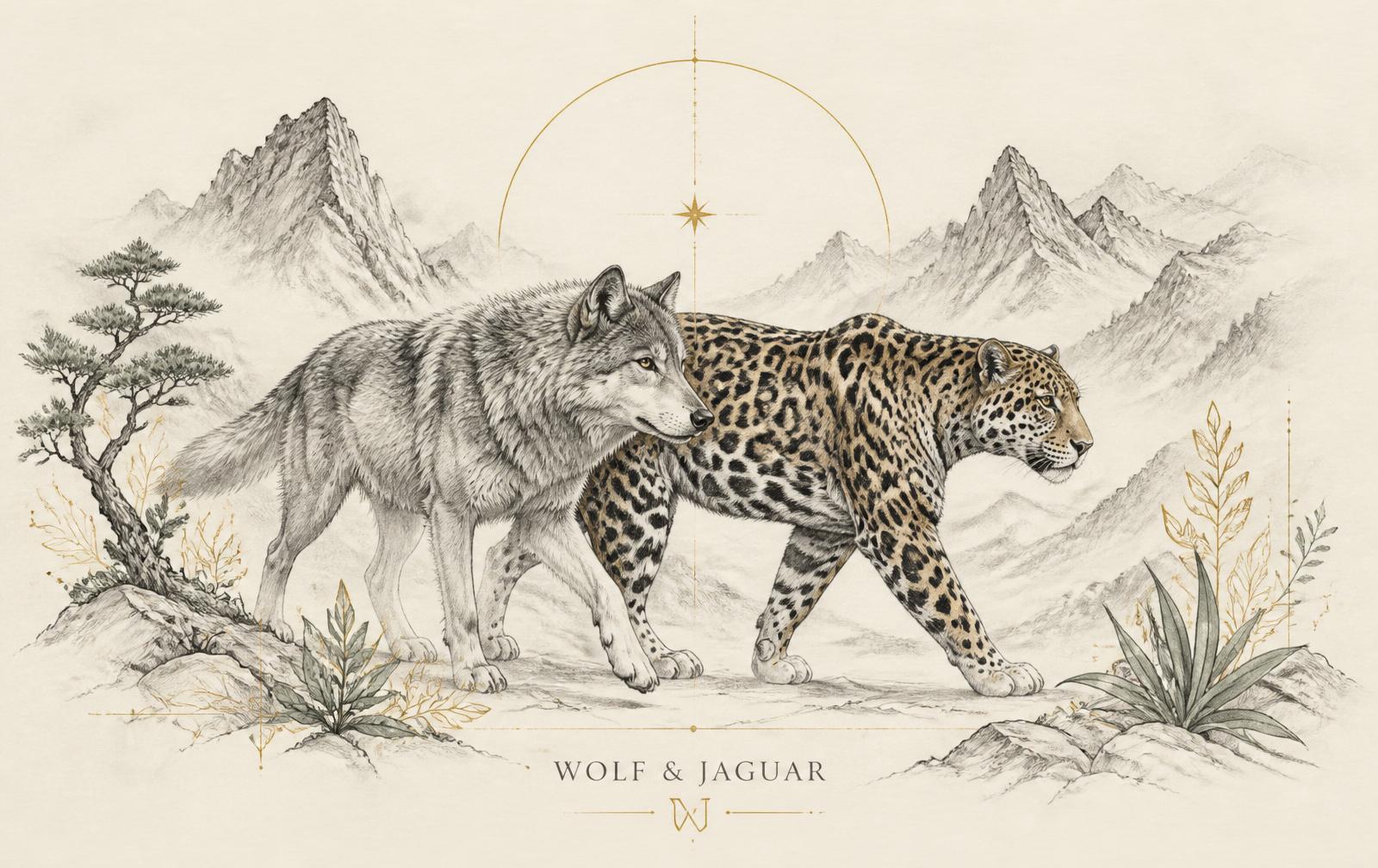
High in the mountains, after the first snow, a traveller once found two sets of tracks moving side by side through a narrow pass.
One was the wolf's — steady, measured, each print landing exactly where the last had been, the way instinct walks when it trusts itself. The other was the jaguar's — quieter, wider, almost dreamlike, as if she had not so much stepped as arrived.
They did not cross. They did not compete. They walked the same distance, at the same pace, through the same weather. Where the pass narrowed, their prints briefly overlapped, and then parted again — never leaving one another.
The traveller followed the tracks for a long time before he understood what he was looking at. It was not two animals. It was a way of moving through the world.
The wolf is the part of us that acts — that hunts, that builds, that makes the phone call, that walks up the mountain even when it snows. The jaguar is the part of us that senses — that dreams, that reads a room without a word, that knows when to be still and when to strike.
Alone, each is only half a life. The wolf without the jaguar becomes a machine. The jaguar without the wolf becomes a ghost.
But together — instinct and intuition, wildness and wisdom, action and presence — they walk any pass, in any weather, and leave a trail others can follow home.